





Eye For Film >> Movies >> Six Days In Spring (2025) Film Review



Joachim Lafosse has long been a proponent of what might be termed ‘cinema for grown-ups’. His films may often have straightforward set-ups but they tend away from the melodramatic and towards the thoughtful and complex and are often riven with tension. His latest, which unfolds over the timescale of the title, hinges on two of his recurrent themes – relationship breakdown and shame – but there’s also a decidedly spring-like hopefulness to proceedings that marks a step change from much of his previous work.
Sana (Eye Haïdara) has got her hands full. A not-long-single mother to twin sons Raphael and Thomas (real-life siblings Leonis and Teodor Pinero Müller), she’s also working two jobs so it’s no wonder the prospect of a trip away with them appeals. It also has the added attraction of her new, younger lover Jules (Jules Waringo), although the kids still see him as their football coach.
When their plans fall through, Sana decides to take everyone, in secret, to her ex-parents-in-law’s beach front holiday home on the French Riviera – an incident that draws on a real event in Lafosse’s own life. If Lafosse’s previous film, A Silence, was all about the damaging nature of shame, his latest is in many ways about refusing to be cowed by it. There’s no doubt Sana married well and this elevated her and her children’s status and part of the strength of her character is that she refuses, with her children in mind, to be put back in a lower class box.
Lafosse and his co-writers Chloé Duponchelle and Paul Ismaël capture both the tension and excitement of her plan for the children. On the one hand, it’s quite fun to sneak about by candle light at night but there’s also the fear of being caught – especially since they don’t really understand how the landscape of their lives has changed. After all, they are still their grandparents' grandchildren, why shouldn’t they be able to holiday as before?
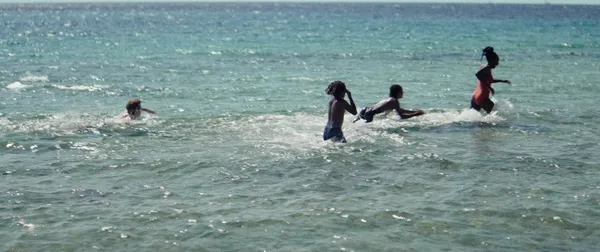
An impromptu forbidden swimming excursion makes them aware of the shifting sands they’re standing on, courtesy of a stringent cameo from Damien Bonnard, while Emmanuel Devos’s casually imperious neighbour also highlights the class chasm.
Haïdara’s ability to switch moods from fun to fear is a key selling point of the film as Lafosse also articulates the way she is slowly but surely reclaiming her life. Jules hovers in a halfway space between her and the children, almost acting like a babysitter more than a lover at some points. Beautifully lit by Jean-François Hensgens at night, the cinematographer also makes the most of the natural light of the French seashore to emphasise the upbeat nature of the energy between Sana and her children. The lilting piano score from Dutch composer Reyn also buoys the mood. A subtle entry in Lafosse’s CV that celebrates the durability of mother/child relationships and declares there’s no shame in wanting to be happy.
Reviewed on: 07 Oct 2025


